4 series. 18 books.
Every series, every book — researched from the records and written to move. Pick up the next one wherever you read.
Airborne - Hold Until Relieved
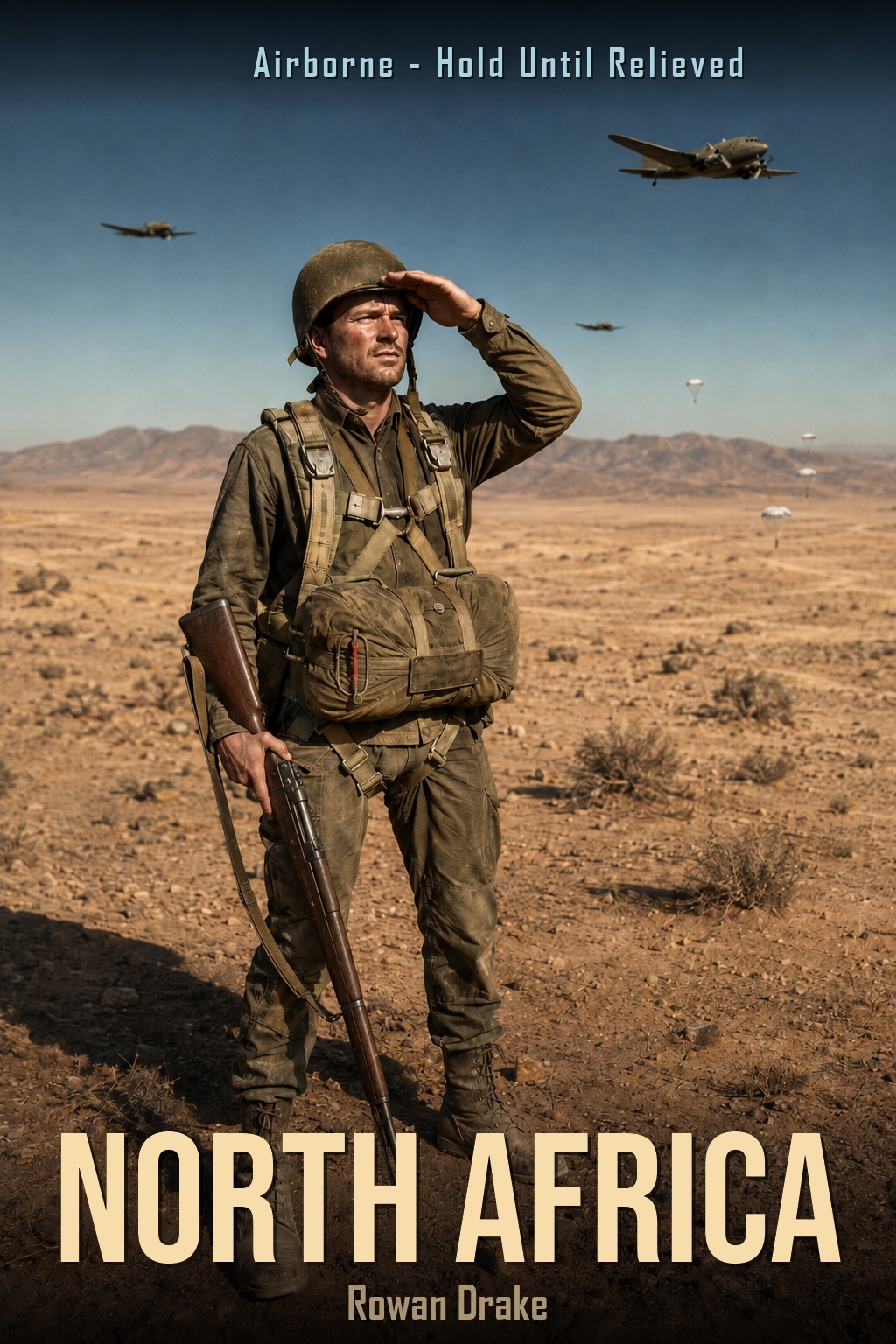
Airborne, North Africa
The heat came first, the kind that settles into your bones and never quite lets go. Then came the wind, kicking up sand through boots and rifles, through memory and time. But what stayed with him most wasn't the weather. It was the silence before the jump. Patrick Donovan never expected to be among the first. Not to wear the boots of a paratrooper. Not to step out of a C-47 into a sky torn with tracer fire. But in 1942, when the world was on fire and history waited in the dust of North Africa, he was there. From the brutal trials of training to the confusion of combat, Donovan's story is one of courage sharpened by fear, of loyalty forged in blood and grit. What began as a young man's escape from a quiet farm becomes a plunge into a war that will test everything—his endurance, his ideals, and his soul. This is not a tale of medals or headlines. It is a ground-level story of the men who jumped without knowing where they'd land, and of the ghosts they brought home.
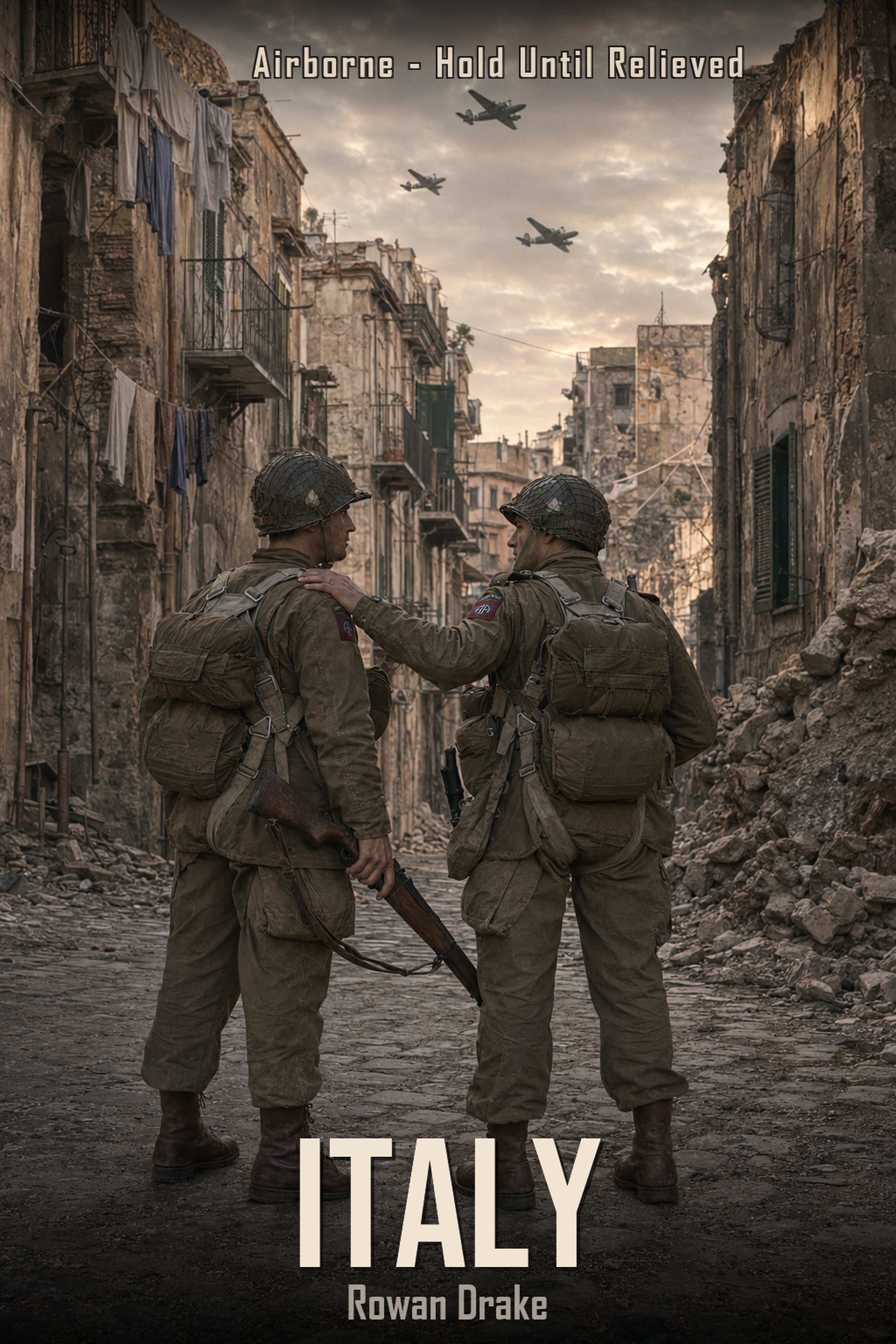
Airborne, Italy
Airborne: Italy is not a heroic retelling of World War II from a safe distance. It is a ground-level account of what happens when training collides with weather, doctrine collides with reality, and men are measured not by reputation but by how they move when everything goes wrong. Told through the eyes of a combat paratrooper transferred into the 82nd Airborne in the summer of 1943, the story follows the weeks before Sicily and the early phases of the Italian campaign, not as legend, but as lived experience. Camps are orderly because chaos is coming. Briefings are precise because they will soon be wrong. Confidence exists, but it is earned daily and revoked without ceremony. This is a novel about elite troops without pretending they are infallible. About leadership built on habit rather than speeches. About units that function not because plans are perfect, but because men adapt faster than circumstances collapse. The Army here is competent, flawed, learning, and often learning too late. The writing is unsentimental, darkly observant, and focused on the small details that decide survival: discipline, tone, silence, preparation, and the quiet economy of trust between men who may have met only hours earlier. Airborne: Italy is for readers who want World War II fiction stripped of nostalgia, a story that respects the soldiers by telling the truth about how wars are actually fought, and what it costs to go first.
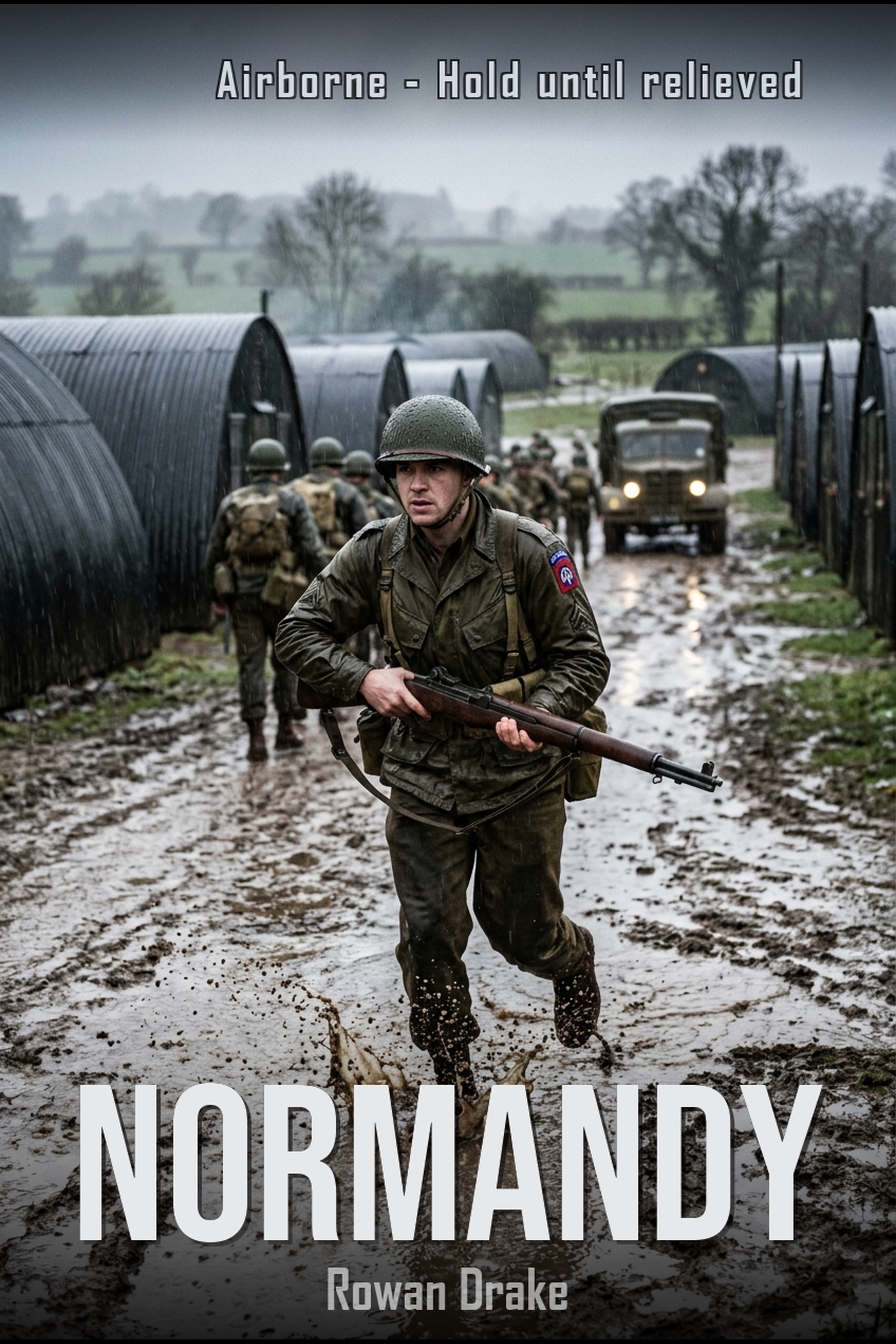
Airborne, Normandy
Rain, mud, and powdered eggs. Then a clipboard notice that asks for volunteers and won't say for what. For Corporal Donovan, three months of gray English tedium have nearly convinced him the war has forgotten how to frighten a man. Then battalion comes hunting volunteers for a duty named only "airborne-related", and the truth, when it comes, is worse than the vagueness. Pathfinders. First in, alone in the dark, half an hour ahead of the regiment, laying beacons and marker lights so the sky can open safely on top of them. No rifle company at his back. No platoon to absorb the drop. No man beside him to say the name of. Donovan already froze once, at a Tunisian crossroads he's never finished paying for. Now the war is asking the same question twice, and this time, the only witness to his answer will be himself. Around him, a squad that knows his face in the dark needles, worries, and refuses to tell him no.
Armor - Iron Will
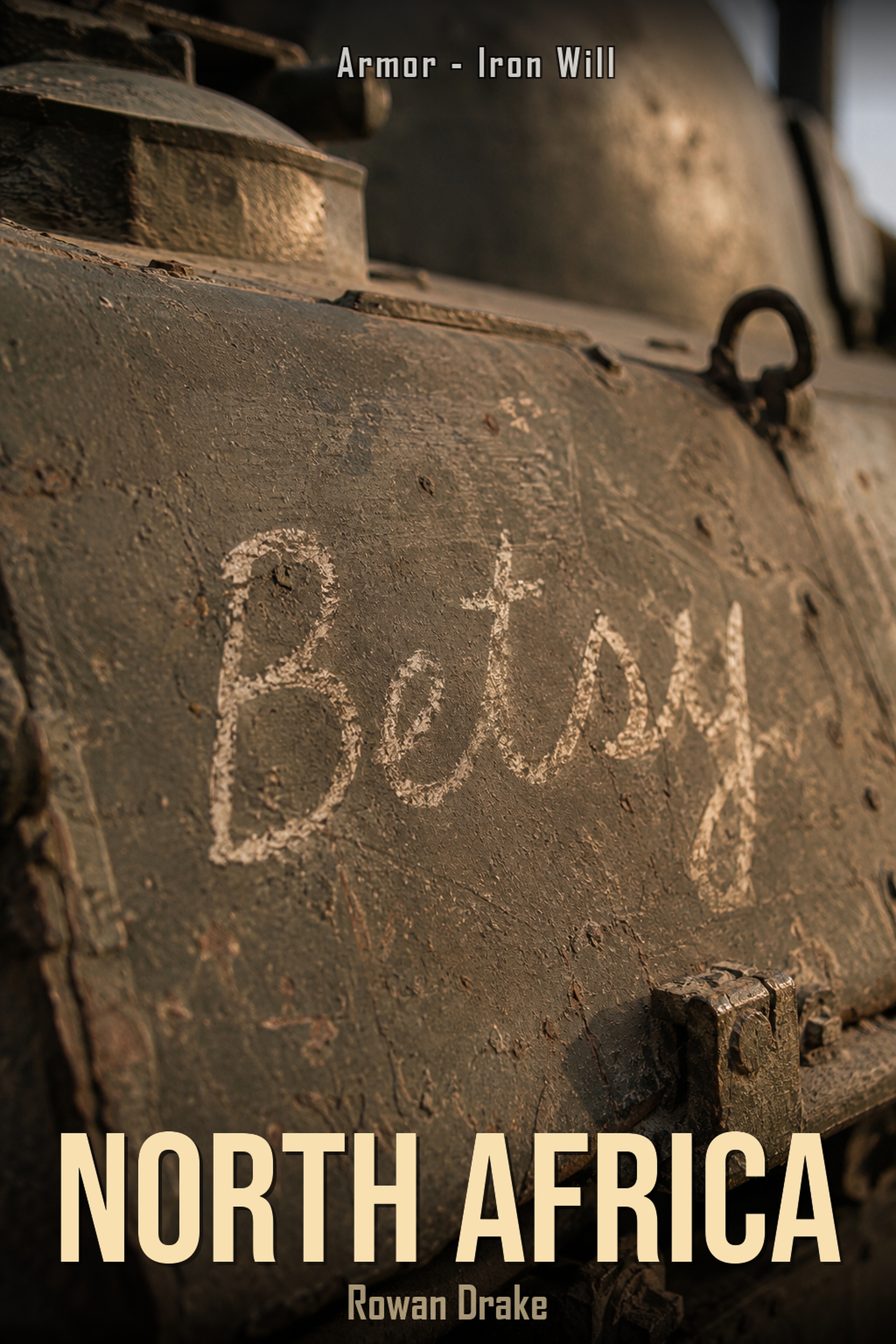
Armor, North Africa
ook One in the "Iron Will" Series They signed up to serve. They didn't expect to fight in machines held together by luck, grease, and grit. It's 1942, and America's first armored soldiers are heading to war, not in Europe, but in the scorching deserts of North Africa. Outgunned and undertrained, the men of the 1st Armored Division must learn fast how to survive in steel beasts that break down as often as they fight. Through the dust and diesel, one tank crew, led by a stubborn sergeant, a smart-mouthed cowboy, a silent mechanic, and a rookie who talks too much, will forge a bond stronger than armor. This is not a story about perfect heroes. It's a story about real men inside imperfect machines. About loyalty under fire, dark humor in the face of chaos, and the brutal, beautiful reality of tank warfare. If you loved Band of Brothers and Fury, step into the turret. The engine's running. The war's just begun.
Armor, Italy
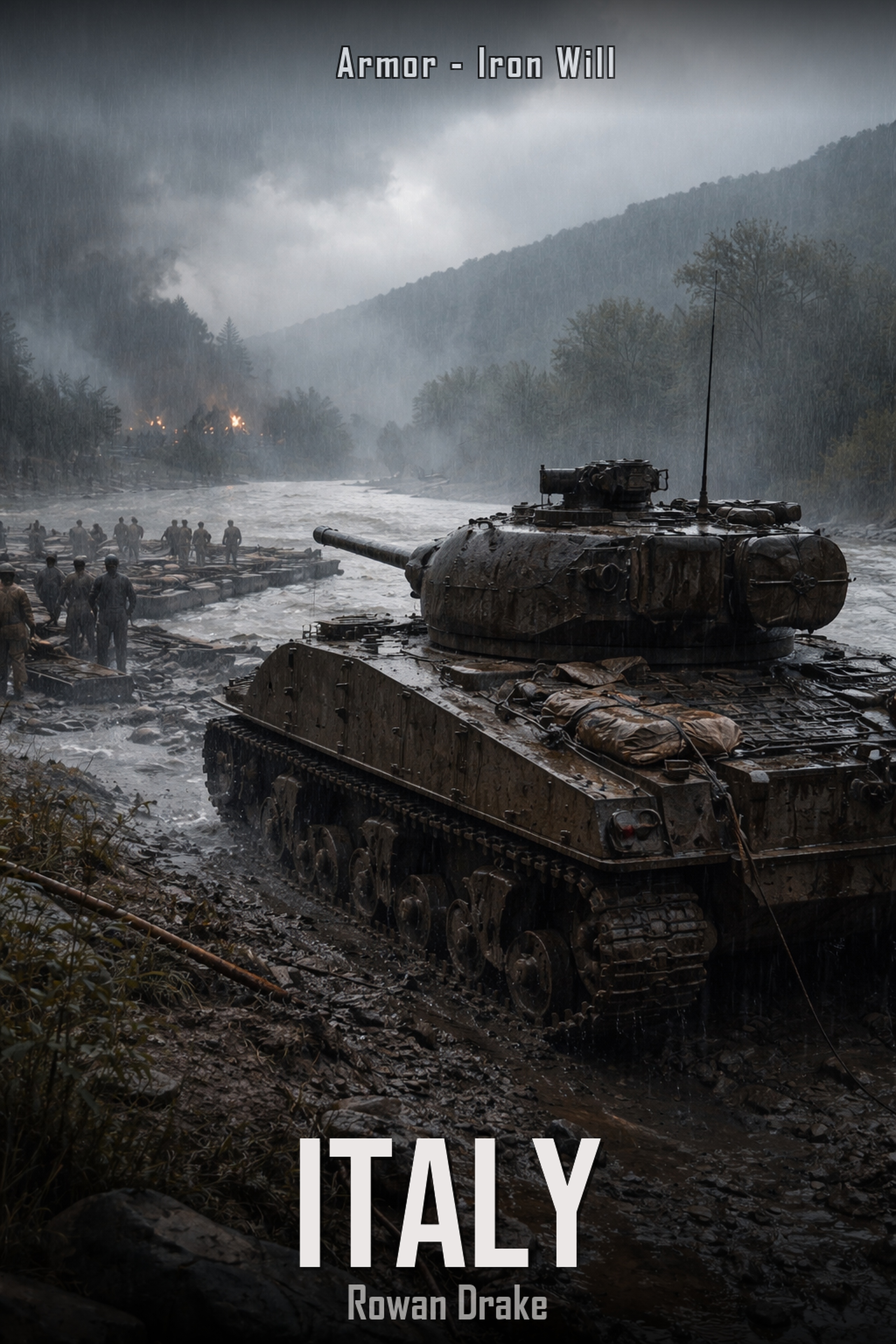
Italy, 1943. After North Africa, a veteran tank crew is transferred into a battalion preparing for a different kind of war. One with narrow roads, unreliable ground, stubborn resistance, and no clear end in sight. What follows is not a story of sweeping breakthroughs, but of endurance, adaptation, and the quiet mechanics of survival. This novel follows a Sherman crew attached to the 751st Tank Battalion as they move from Sicily to the Italian mainland, supporting infantry across beaches, hill towns, night engagements, and river lines under constant pressure. The fighting is close. The terrain is hostile. Success is measured in minutes gained and men brought back alive. Told in a grounded first-person voice, the book focuses on the realities of armored warfare in Italy. Mechanical failure under fire. Fragmented units in fog and darkness. Orders that arrive late or incomplete. Crews learning, slowly and painfully, what the campaign will demand of them. There are no speeches here. No clean victories. Only professionals doing difficult work in bad conditions, and learning what competence costs when the war refuses to end. Written with strict attention to historical detail and period accuracy, this novel offers a sober, soldier-level view of the Italian campaign through the eyes of men who had to make tanks work where tanks were never meant to fight.
Rangers lead the way
Rangers, North Africa
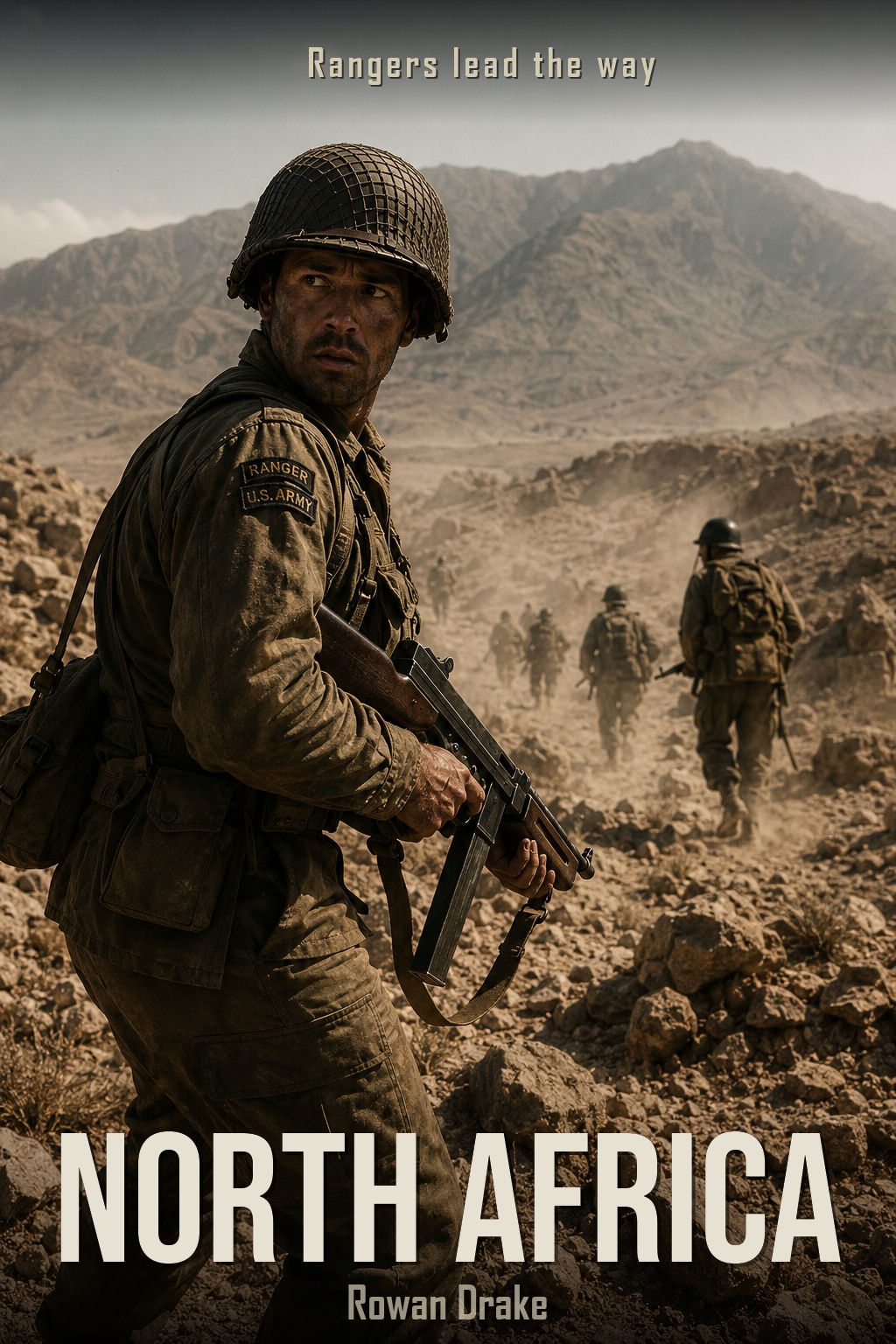
They weren't soldiers yet. But they volunteered anyway. Fort Benning, Georgia. Late summer, 1942. Across a sweltering motor pool, a sergeant tells a handful of infantry volunteers they can still walk away — no shame in it. Some do. The ones who stay are about to become something the U.S. Army has never quite built before. Told through the eyes of Corporal Jack Miller — a quiet Kansas farmhand who keeps his head down and his instincts sharp — Rangers, North Africa follows the ragged birth of the 1st Ranger Battalion from grueling selection at Fort Benning to the commando cliffs of Scotland, and from the beach landings at Oran to the brutal mountain passes of the Atlas. Beside him: O'Connor, a wisecracking New Yorker with fists faster than his filter. Washington, who laughs loudest when he's most afraid. Kovacs, who's too young for any of this. And Staff Sergeant Santoro, who never raises his voice and never has to. This is not a story of medals or headlines. It is a ground-level account of men forged in dirt and cold and doubt — of the price paid before a single beachhead is taken, and of the bond that holds when rank and orders are not enough. Rooted in the real history of the 1st Ranger Battalion, Operation Torch, and the North Africa campaign of 1942–43 Inspired by the founding vision of Major General Lucian Truscott and the British Commandos. First book in the Rangers Lead the Way series Perfect for readers of Rick Atkinson's Liberation Trilogy, Steven Pressfield's Gates of Fire, and David L. Robbins's War of the Rats.
Rangers, Italy
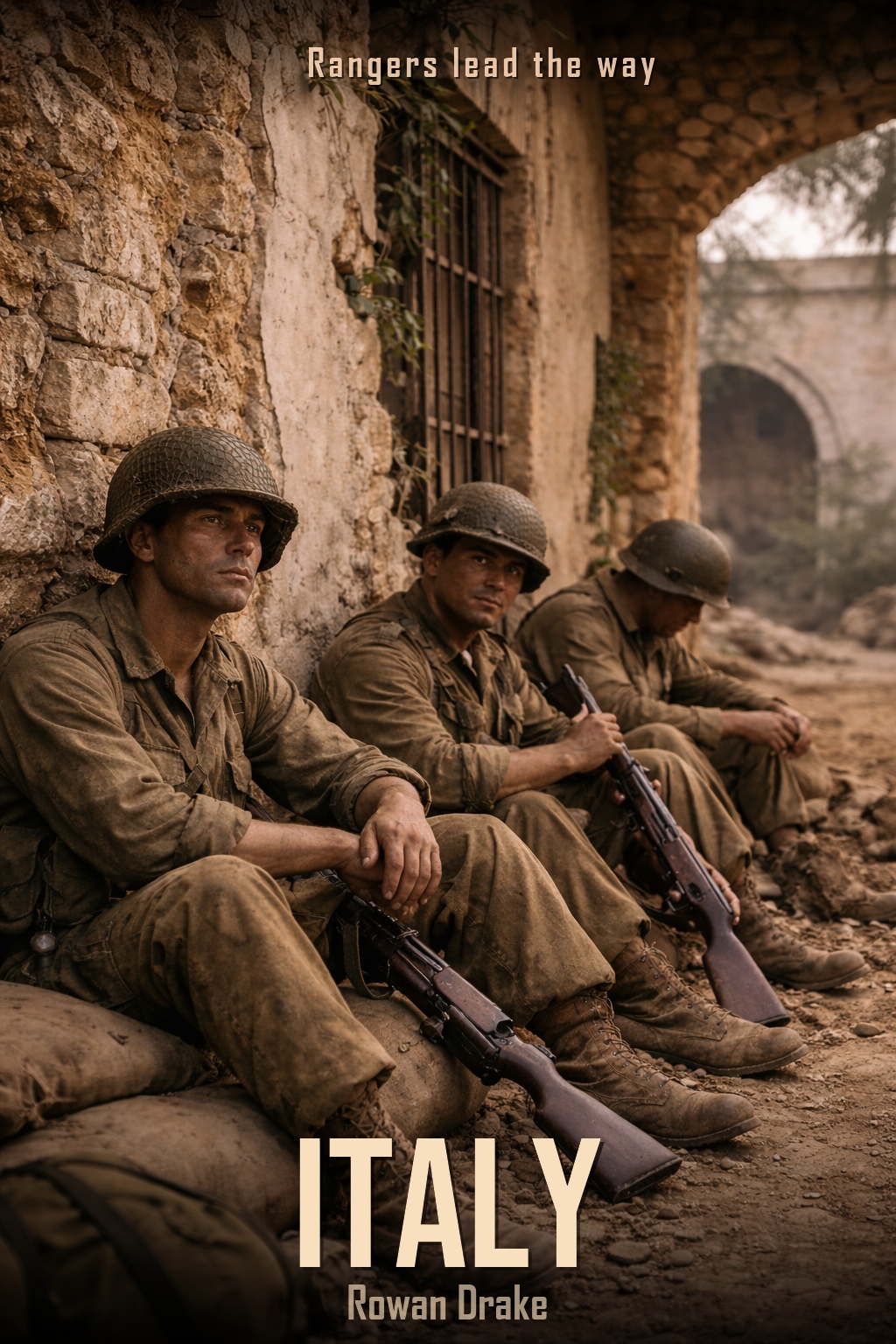
Rangers Lead the Way: Italy plunges readers into the heart of World War II’s brutal Mediterranean campaign, where the U.S. Army Rangers, battle-hardened from North Africa, must now prepare for their most daring mission yet: the Allied invasion of Sicily. Told in a gripping first-person perspective, this powerful historical fiction novel follows Sergeant Jack Miller as he leads his men through the unforgiving hills of Tunisia, the formation of the elite Ranger Force, and the punishing training that will forge the next generation of soldiers. As new recruits arrive and tensions with other units simmer, the Rangers must learn to fight as one, or risk falling apart when the bullets are real. Blending rich historical detail with emotional depth and cinematic action, Rangers Lead the Way: Italy captures the brotherhood, sacrifice, and resilience of America’s most legendary warriors. Perfect for fans of military fiction, Band of Brothers, and realistic World War II novels.
Rangers, Normandy
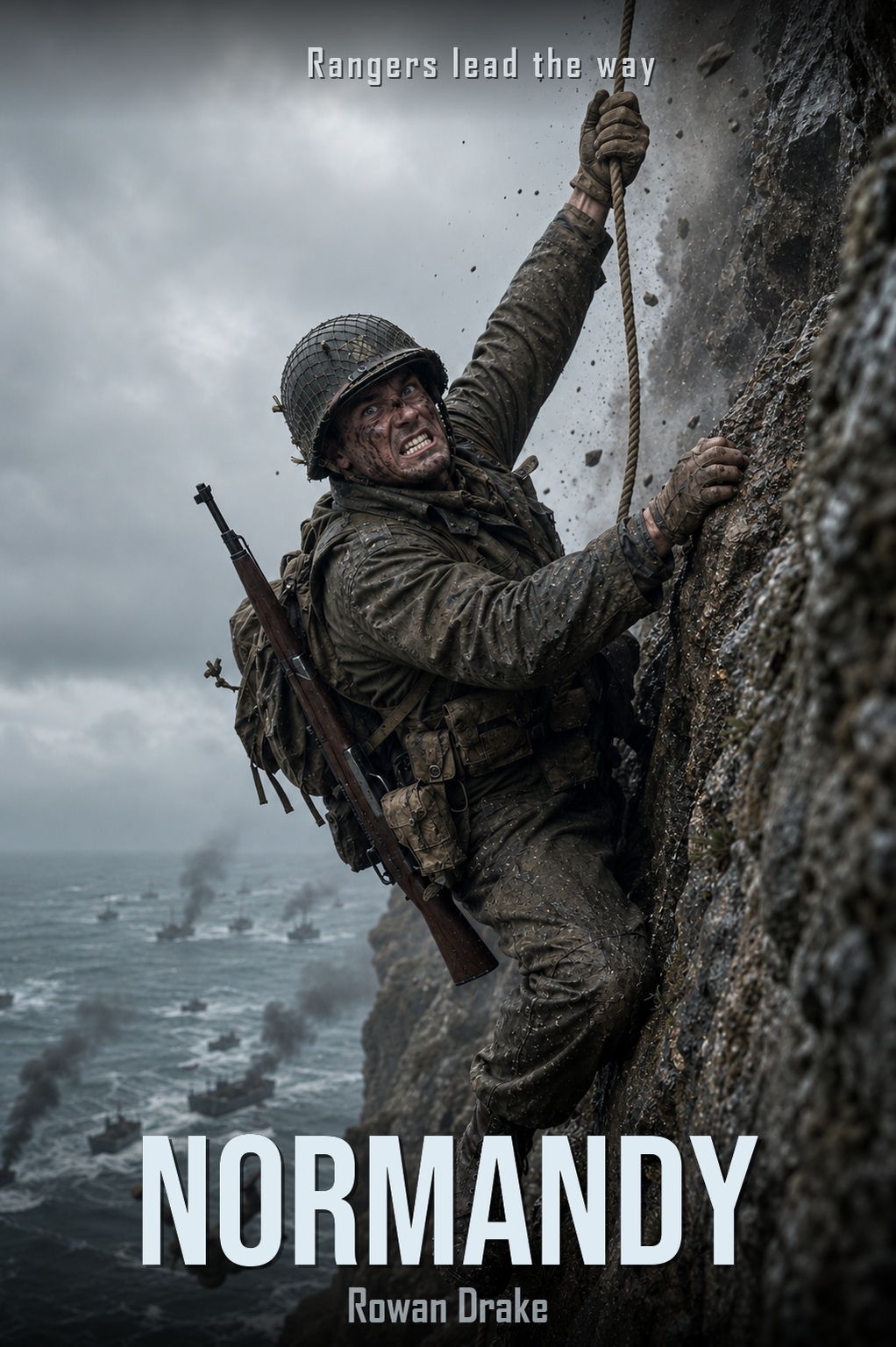
Lieutenant Jack Miller, now in command of a Ranger platoon, is thrust into the heart of the Normandy campaign, where every decision could mean life or death. Having already battled through North Africa and Sicily, Jack is no longer just a seasoned soldier, he's a leader responsible for the men who depend on him. But war is more than tactics and firepower; it's about facing impossible choices. As the fighting intensifies, Jack finds himself torn between protecting his men and obeying orders, all while navigating the harsh realities of war. With each step through the chaos of Normandy, he must fight not only for survival but for the lives of the Rangers under his command.
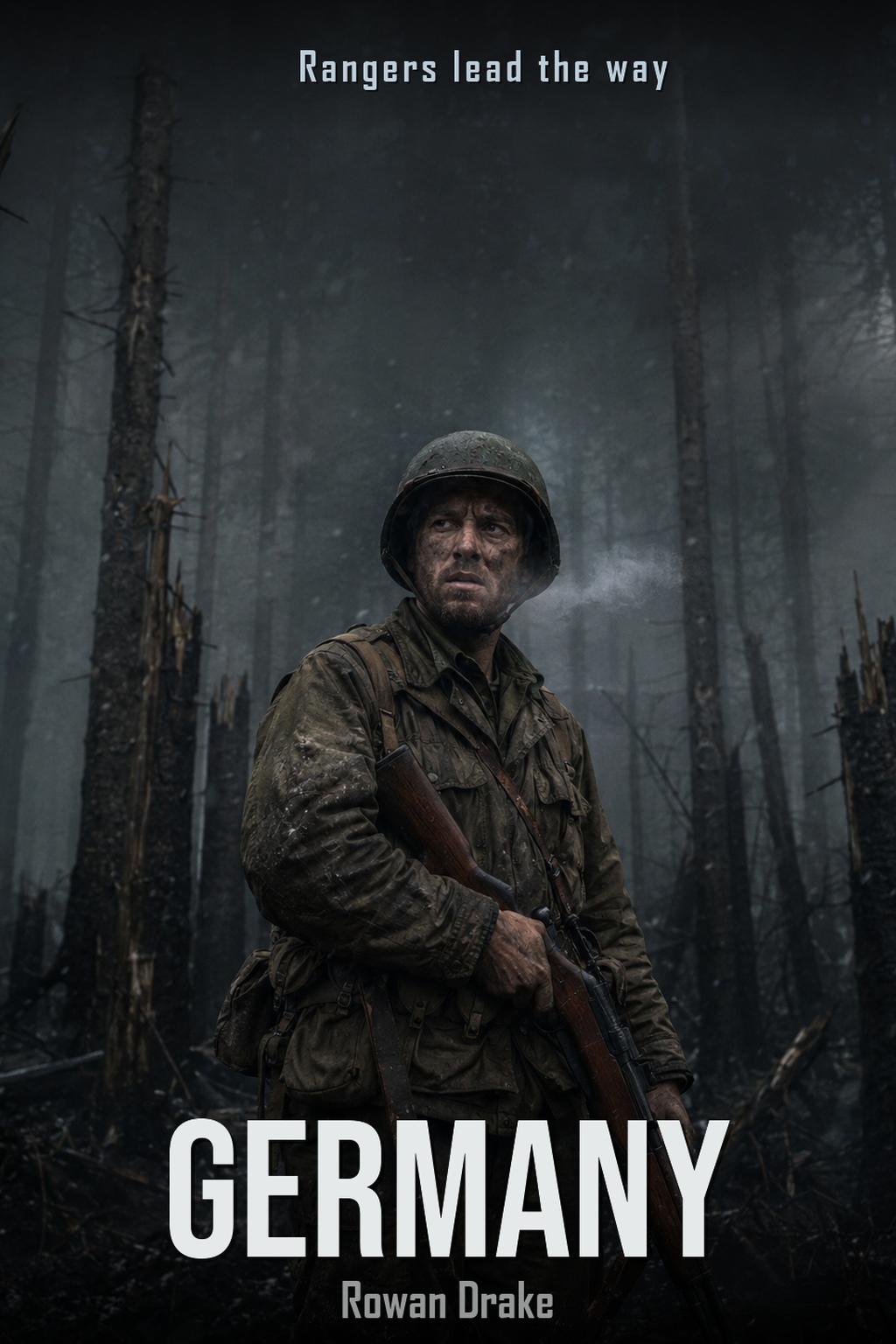
Rangers, Germany
The Hürtgen Forest doesn't take prisoners. It takes everything else first. November 1944. The war that was supposed to be ending has dragged Captain Jack Miller and his Rangers into a frozen green hell on the German border — a place where the artillery turns trees into shrapnel, the mud swallows men whole, and the dead lie unburied along trails no one will remember. Miller never asked to be a captain. He earned the bars the only way the war hands them out: by surviving when better men didn't. Now he leads eighty-three exhausted soldiers against an enemy that knows every path, every choke point, every way to make them bleed. There are no beaches to storm here. No hills worth the cost. Only fog, wire, and the slow arithmetic of attrition. As the Germans probe his thinning line and the cold kills as surely as bullets, Miller faces the one question the forest keeps asking: how much can a man hold before there's nothing left to give? Step into the trees. They're already watching.
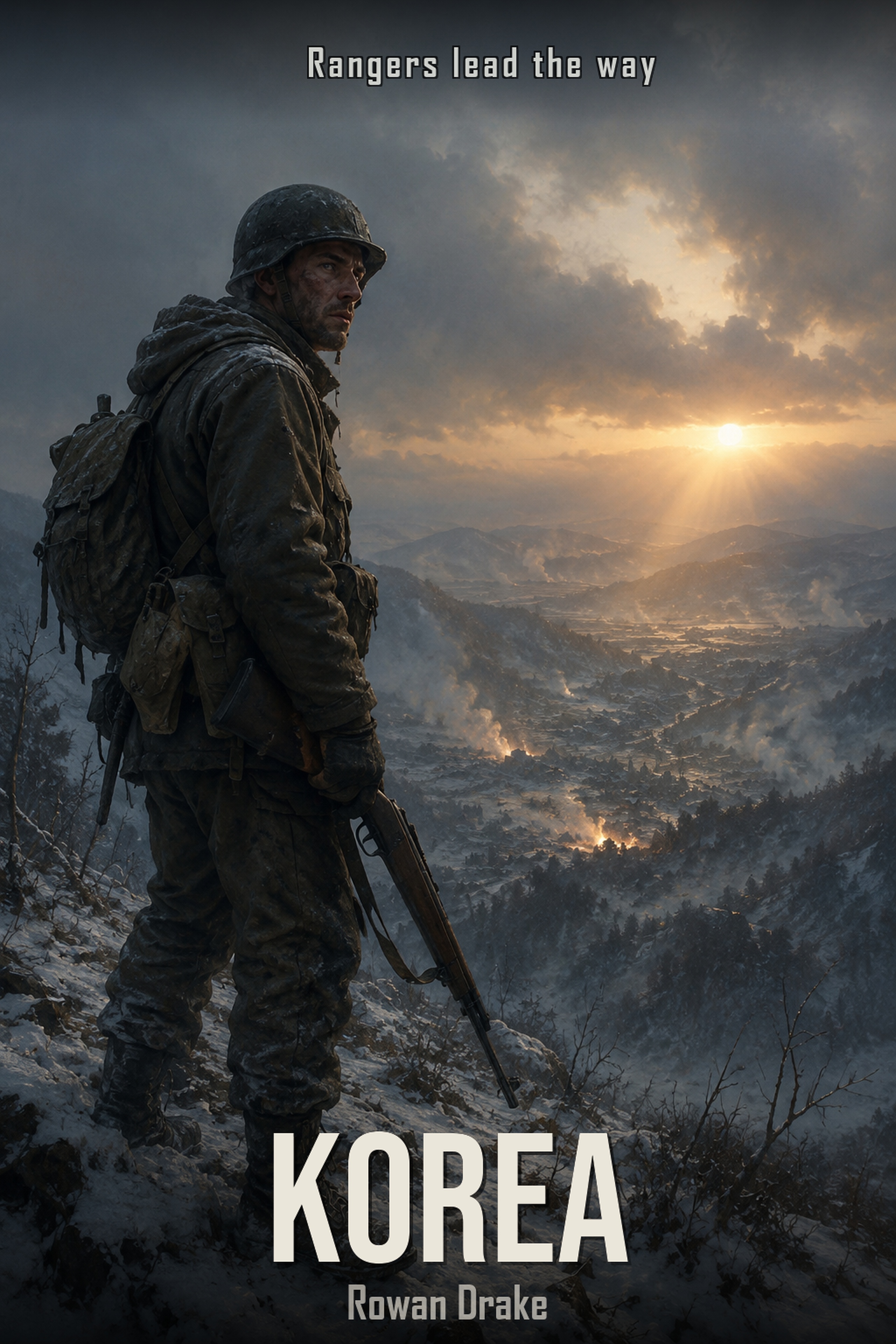
Rangers, Korea
Behind every quiet morning, a soldier waits for the war to call him back. In the spring of 1950, Jack has traded the battlefields of Europe for the wheat fields of Kansas. He has a wife who sees the ghosts behind his eyes, two young sons who think he's invincible, and a fence post that won't stay standing. It should be enough. It isn't. When North Korean troops storm across the 38th parallel and Truman commits American forces, Jack hears his name called from two thousand miles away. The peace he fought to earn was never quite home — and the war he survived was never quite finished with him. Now he must choose between the family he loves and the duty that defines him, between the man he's trying to become and the warrior he never stopped being.
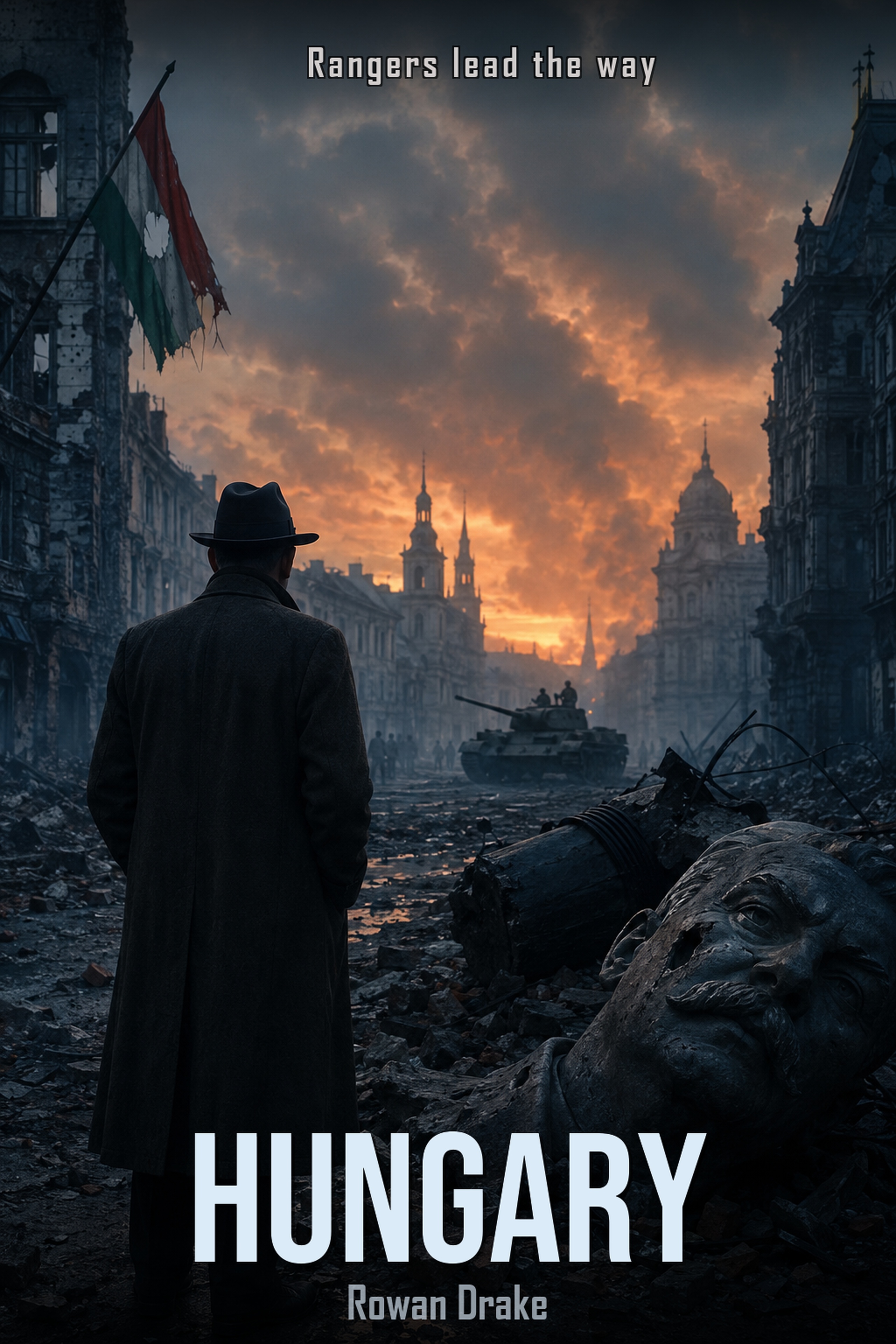
Rangers, Hungary
Two wars carved their marks into Jack Miller. Only one of them left him alive enough to notice. Kansas, 1951. The fighting is over, but Jack has not come all the way home. A truck backfiring on the county road puts him flat in the dirt beside his own four-year-old son. A hay bale dropping in the barn drags him somewhere no one can follow. North Africa taught him fear. Italy taught him grief. Korea broke something the other two had only cracked — and now all three wars arrive together, refusing to stay in their separate boxes. His wife Emily keeps a careful watch over the man who returned to her, learning to read his silences like a gauge. His boys are learning too — sorting the world into war and not-war, before and after. But some nights a man stands sentry over his own mind, and there is no relief on the line. A spare, unflinching portrait of a soldier's homecoming and the family who refuses to let him fight alone. Some wounds never bleed where anyone can see them. Read the story readers won't forget.
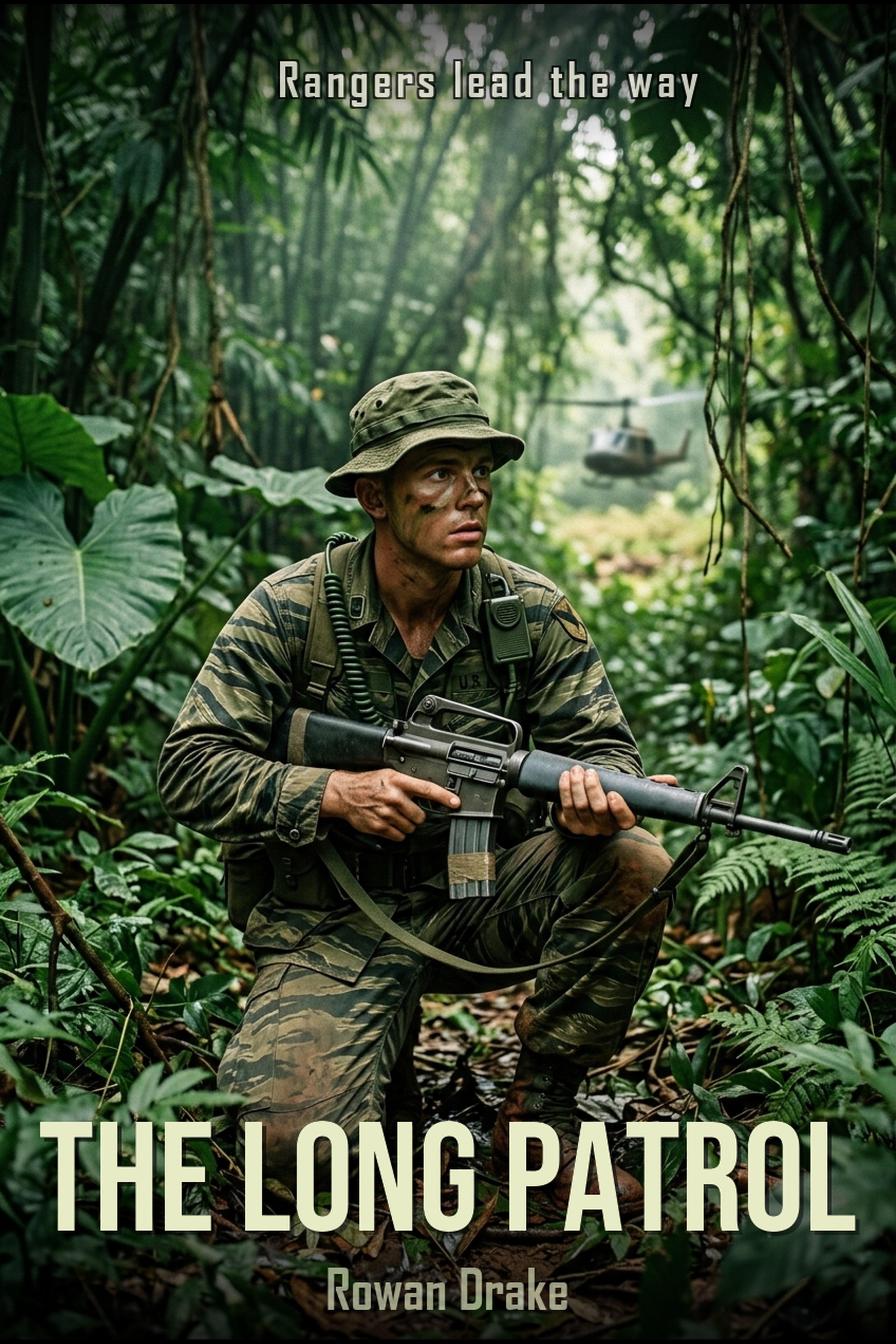
Rangers, The Long Patrol
This is not a story about glory. Rangers, The Long Patrol is a novel about what happens before doctrine, before names, before anyone knows what to call the work that keeps other men alive. In the early years of the Vietnam War, long-range reconnaissance did not yet exist as an institution. There were no patches, no formal lineage, no guarantees of extraction or recognition. There were only small teams sent ahead of the main force, quietly, unofficially, and often without records, tasked with making the unknown smaller before it could kill someone else. David Miller is one of those men. He does not debate ideology. He does not seek distinction. He does not expect credit. What he learns instead is how wars really function, that risk is displaced, not eliminated, that survival depends on judgment, not orders, and that the most effective work leaves no evidence it was ever done. As reconnaissance teams evolve into something the system can finally name, bureaucracy begins to catch up. Forms replace judgment. Doctrine replaces improvisation. Recognition arrives, but too late to matter to the men who built the capability in the dark. Told in restrained, first-person prose and grounded in historical reality, The Long Patrol strips away the mythology surrounding elite units and replaces it with something rarer: function. The quiet endurance of men who go first so others don’t have to. The cost of operating unseen. The distance that grows when recognition finally arrives. This is not a celebration of war. It is a record of how uncertainty is absorbed early, quietly, and at personal cost, long before anyone writes it down. If you’re looking for cinematic firefights, easy heroics, or clean moral arcs, this book is not for you. If you want an unsentimental, historically grounded portrayal of early reconnaissance work in Vietnam, written with restraint, respect, and an understanding of what never makes it into official histories, this is. We went first so others wouldn’t have to.
The Big Red One - Duty First
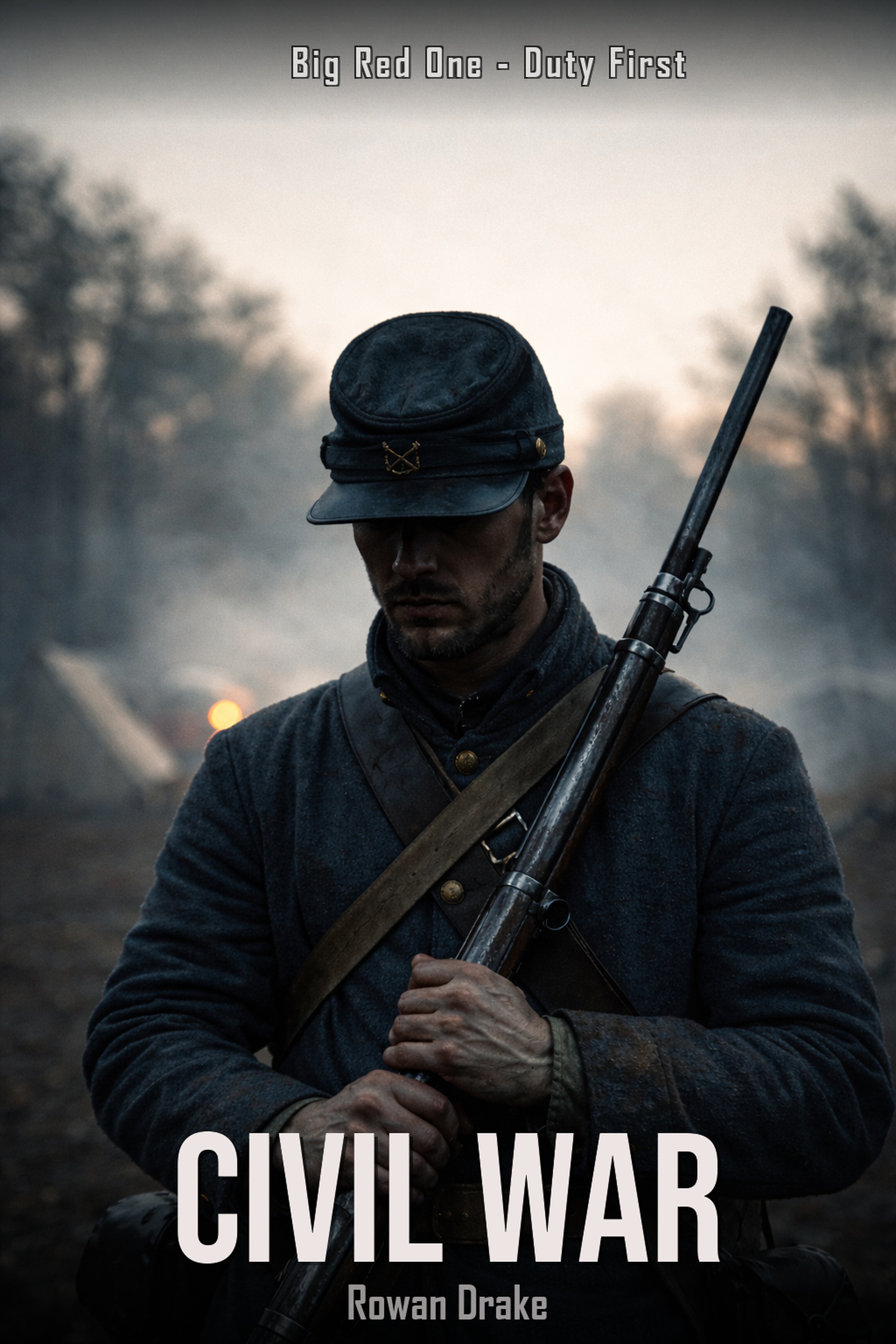
Big Red One - Civil War
The wheel at Anders' Mill has turned every day of Jacob Anders' life. Then the guns open on Fort Sumter, and a Massachusetts farm boy signs five years of his life away on a single line of ink. Dedham raised him quiet: a father who buried friends in Mexico, a brother whose bad leg keeps him from the war he'll never stop minding, a girl behind her father's counter who makes him promise to write the truth and not the brave lie. Now Jacob trades the grinding floor for the gray granite of Fort Independence, where a sharp-tongued sergeant and a company of strangers — a Cork-born joker, a boy too young to be there, a careful German who chooses every word — must be forged into men who will stand where they're told when the shooting starts. He swore he'd come home whole. The war has other plans. A sweeping, intimate saga of the men who answered the call — and the ones who counted the cost. Enlist with Company D today.
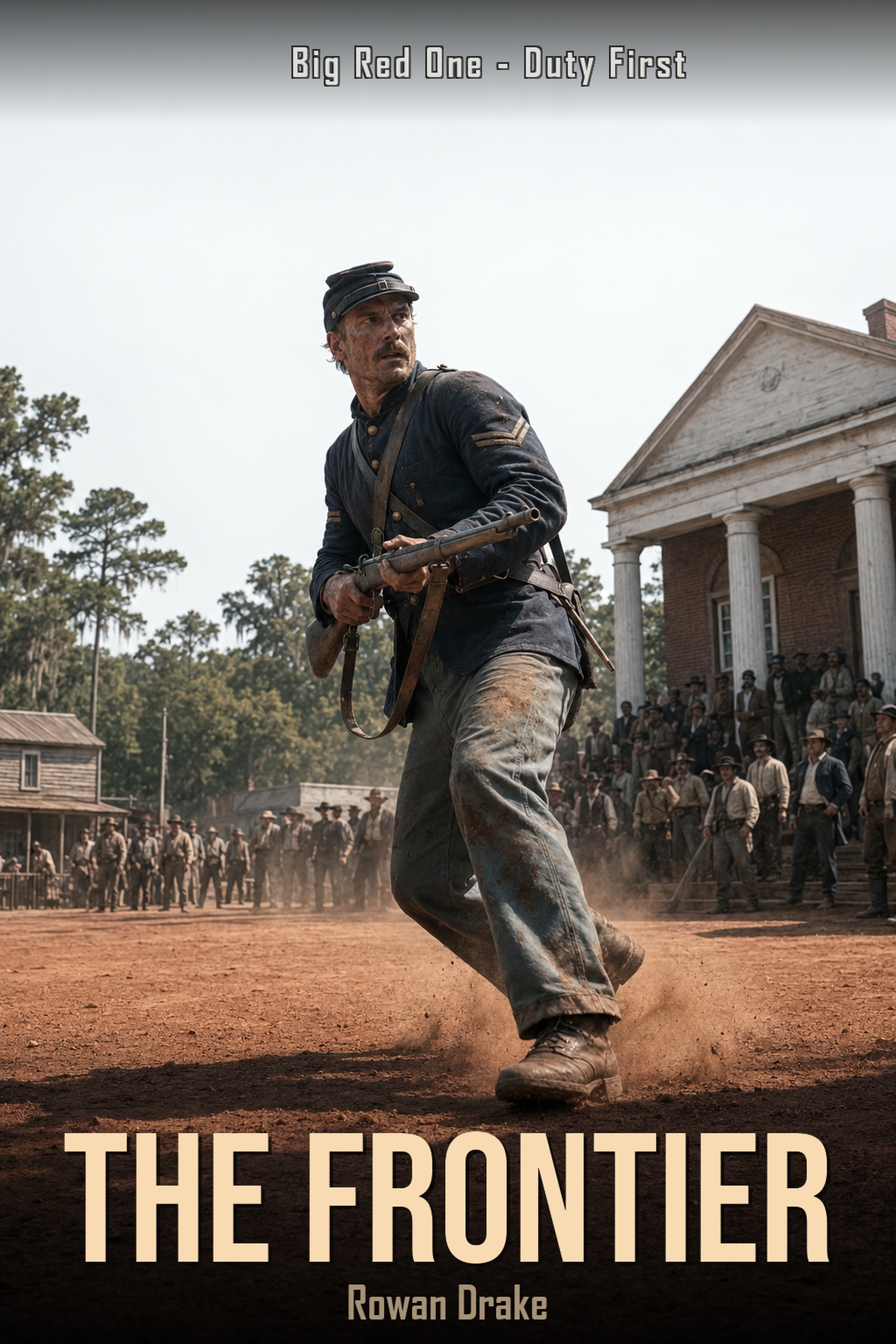
Big Red One - The Frontier
Big Red One, The Frontier is a gripping second installment in a powerful series that captures the origins of the legendary U.S. Army 1st Infantry Division. Set against the harsh backdrop of the Western frontier, this story follows a band of soldiers and settlers carving out lives in a land rife with danger and opportunity. At its heart is the story of the 16th Infantry Regiment, a unit forged from the remnants of war, whose courage and resilience shaped the destiny of the West. From fierce battles with outlaws and Native tribes to the raw struggle of survival, this book delves into the legacy of men and women who turned the wilderness into a nation.
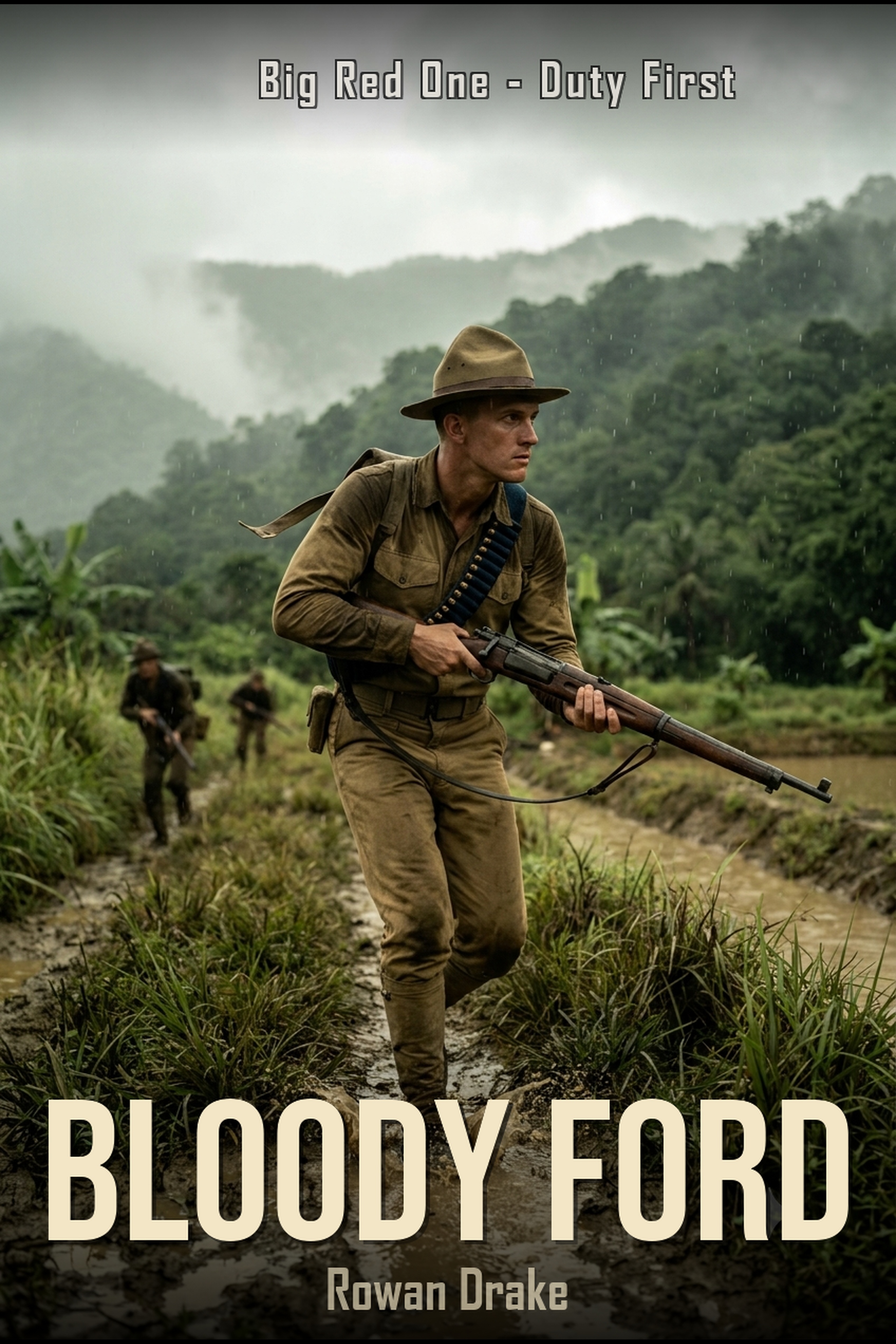
Big Red One - Blood Ford
the shadow of empire and the roar of distant drums, one young soldier steps into the crucible of history, seeking purpose, carrying the weight of his father's silence, and chasing meaning through the fog of war. Set during the Spanish–American and Philippine–American Wars, Big Red One, Spain and the Philippines is a powerful, character-driven novel that explores the cost of service, the complexity of patriotism, and the enduring bond between father and son. With rich historical detail and emotional depth, Rowan Drake delivers a deeply human story about choices, memory, and the battle to preserve one's soul amid the violence of history.
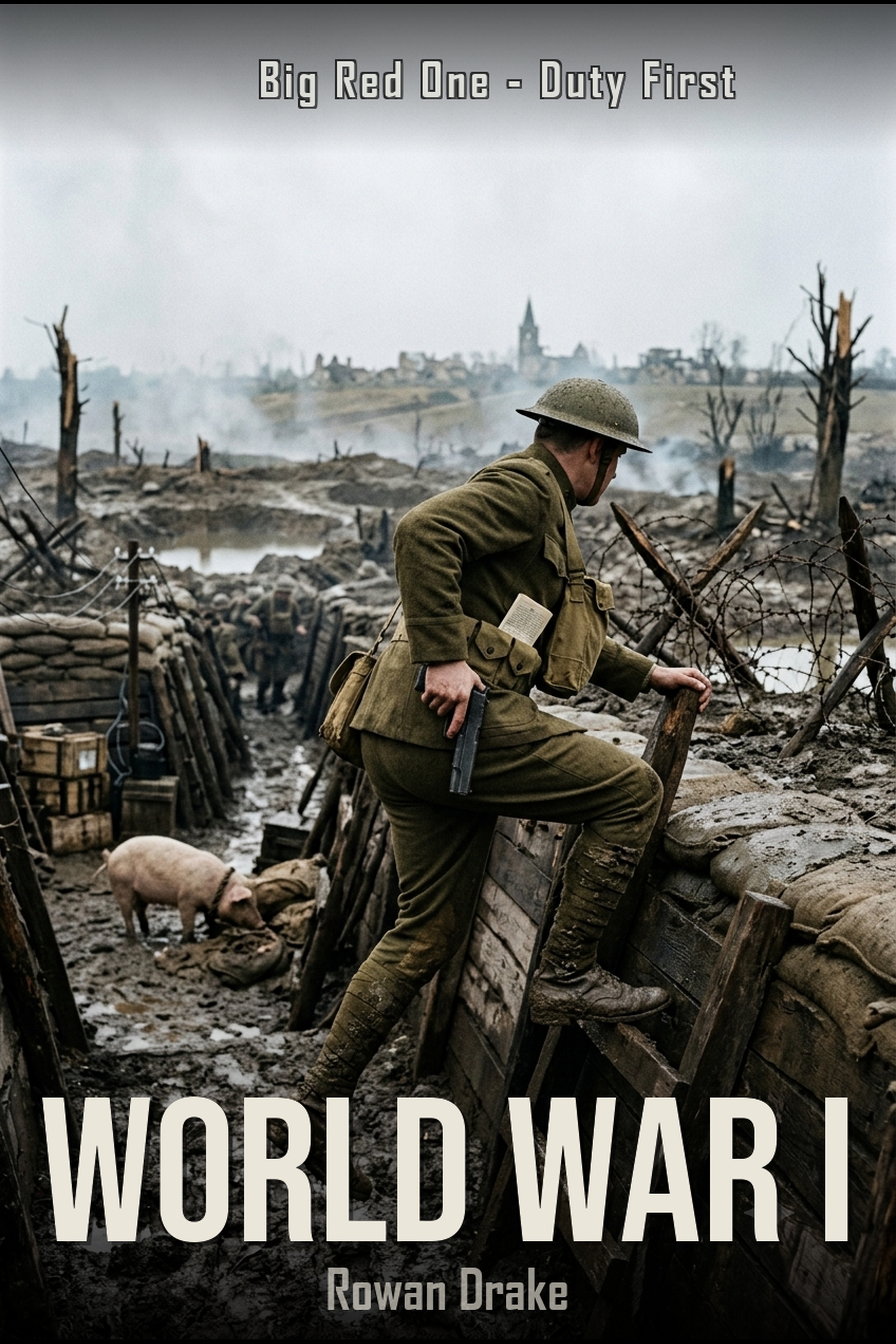
Big Red One - World War I
The Big Red One, Book 4: World War I, and it's a deeply moving, unflinching portrait of one man's return to the battlefield when the world goes to war again. Set in 1917, as the United States joins the First World War, this fourth installment in the acclaimed Big Red One series follows Captain Thomas Anders—Spanish-American War veteran, father, and reluctant soldier, as he's called back into service by none other than General John J. Pershing. From the solemn weight of home in Boston to the chaotic training grounds of Fort Jay, and finally across the Atlantic to France, Anders becomes part of something bigger than himself: the formation of the legendary First Infantry Division, also known as The Big Red One. Through rigorous training, philosophical doubts, and the camaraderie of a new generation of soldiers, he must once again reckon with what war takes—and what it asks us to leave behind. This novel blends lyrical prose with raw realism, capturing the intimate cost of duty and the forging of one of America's most iconic military units.
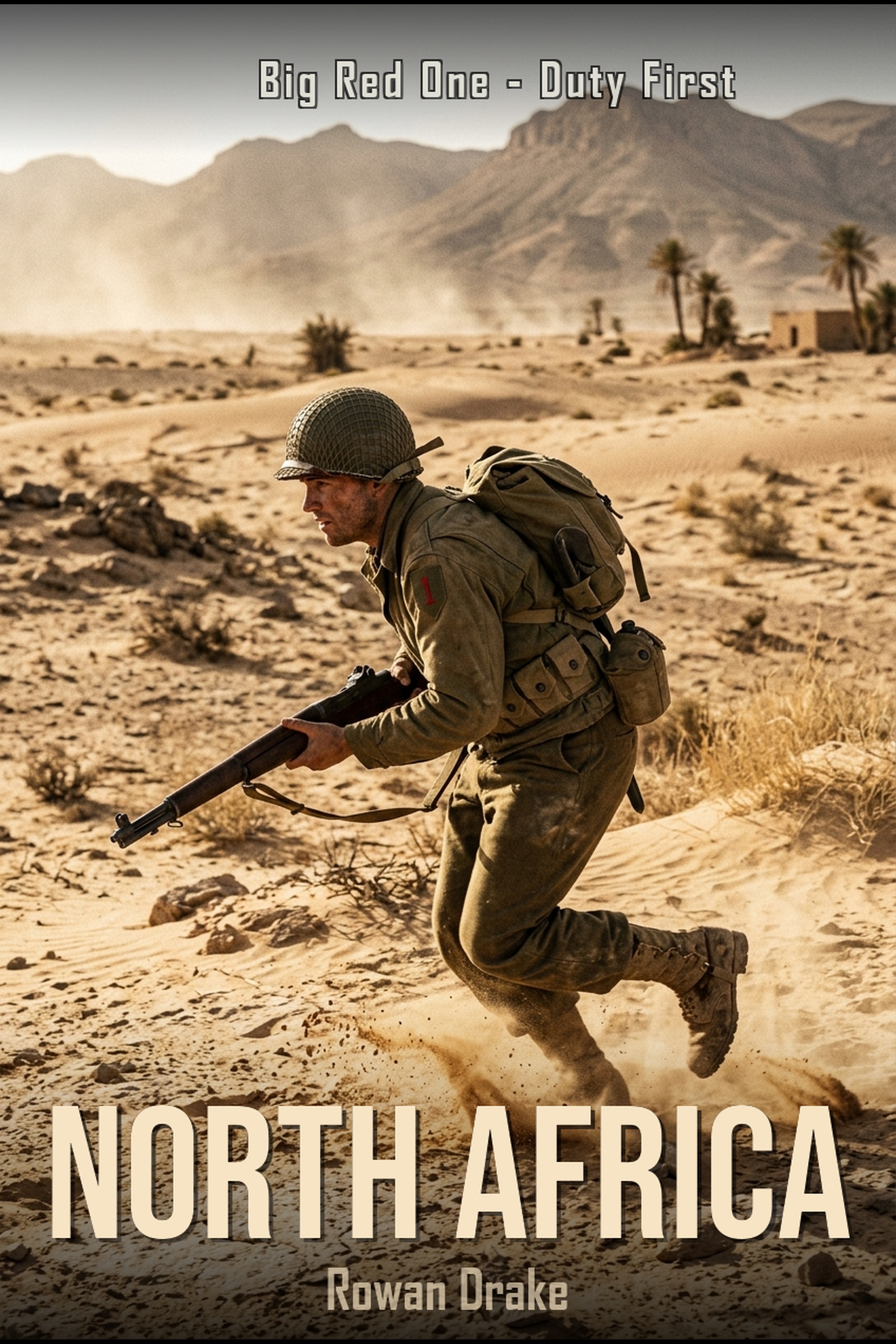
Big Red One - North Africa
Before the bullets fly, before the orders bark, some battles begin at home. Daniel Anders carries a name forged in past wars and shadowed by dissent. As the world hurtles toward chaos, he finds himself at a crossroads, between legacy and choice, obedience and conviction, silence and service. When the 1st Infantry Division prepares for its first major overseas operation in North Africa, Daniel’s journey becomes more than a military campaign, it’s a test of identity, loyalty, and what it truly means to lead. Set against the backdrop of Operation Torch, Big Red One, Book 5: North Africa is a powerful, character-driven historical novel about the men who led the way in America's first steps onto the global stage in WWII. Gritty, emotional, and sharply written, this installment explores not only the battlefields abroad, but the quiet wars waged within. Perfect for readers who love Band of Brothers, The Things They Carried, and deeply human WWII stories rooted in truth, duty, and generational cost.
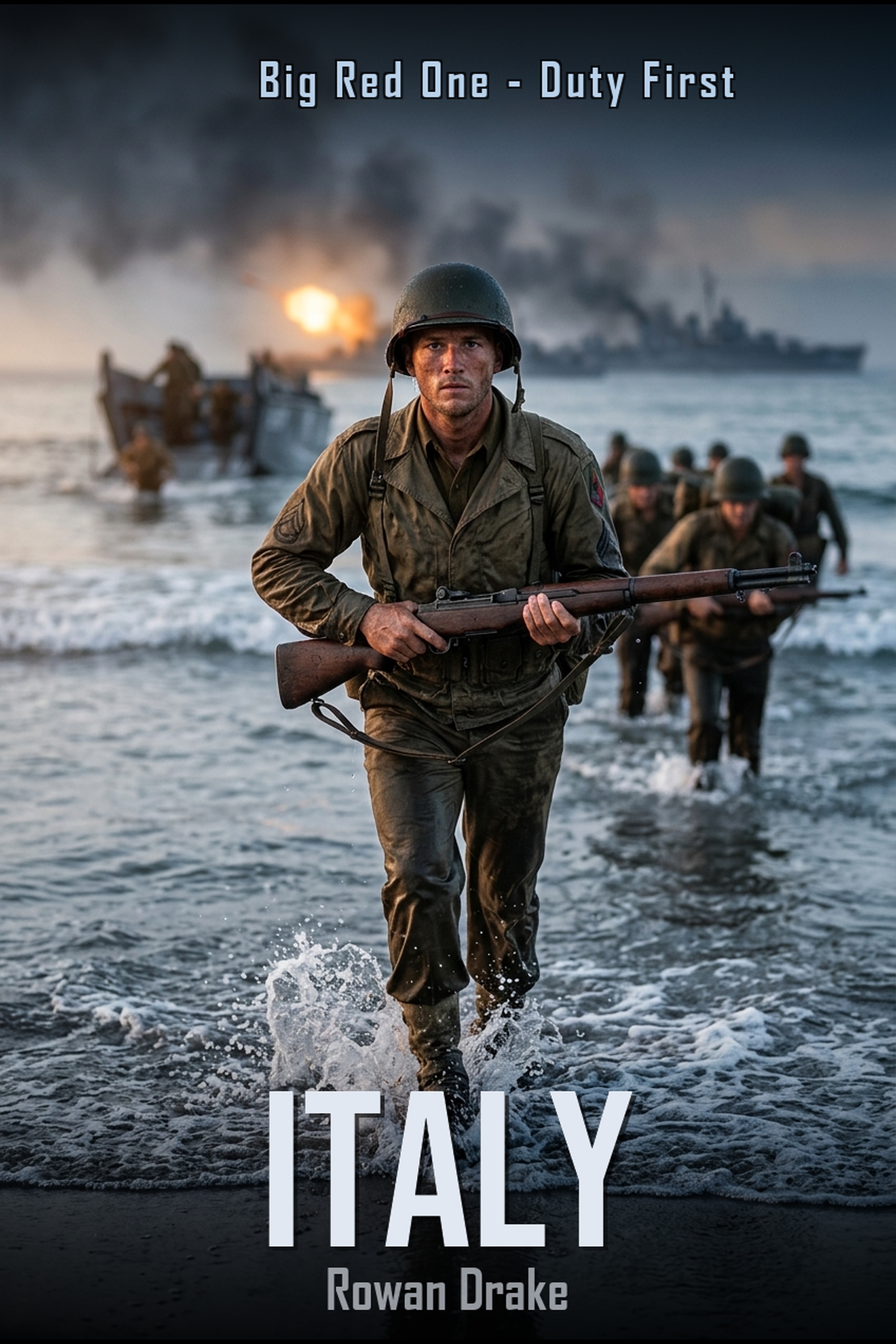
Big Red One - Italy
Some men count the years. Daniel Anders counts the mornings he had no business surviving. North Africa, June 1943. The war has burned through his squad and left three men standing—Anders, the friend who once dragged him from the sea, and the joker who now wears a dead man's patch on his shoulder. They are the old hands now, the tired faces green boys read like weather. And the green boys keep coming: eighteen-year-olds with borrowed courage and their fathers' names, boys the veterans have sworn not to love, because a name costs too much when you have to say it in the dark. Then a mill town kid called Junior walks straight up to the hardest men in camp, looking for a floor to stand on—and cracks Anders's armor in a single afternoon. Ahead lies a full harbor, a rough sea, and a beach called Sicily. The second time, a man goes in knowing exactly what it costs. He goes anyway.